
보수적 중앙은행가가 시장 신뢰를 만든다
워시와 신현송, 새로운 리더십의 과제
케빈 워시 미국 연방준비제도(연준) 신임 의장이 지난 금요일 백악관에서 도널드 트럼프 대통령이 지켜보는 가운데 클래런스 토머스 대법관 앞에서 취임 선서를 했다. 1987년부터 2006년까지 연준 의장을 역임한 앨런 그린스펀 이후 백악관에서의 취임 선서는 처음이다. 워시는 예전 백악관에서 취임 선서를 한 그린스펀을 떠올리는 듯 그린스펀 의장처럼 열정과 목적으로 의장직을 가득 채우겠다고 말했다. 트럼프 대통령의 공격에도 굳건히 맞서 온 제롬 파월로부터 의장직을 이어받은 워시는 연준의 112년 역사상 독립성이 가장 심각한 도전에 직면한 시기에 연준 수장을 맡게 된 것으로 평가된다. 중앙은행 총재와 대통령과의 관계는 어떠해야 할까.
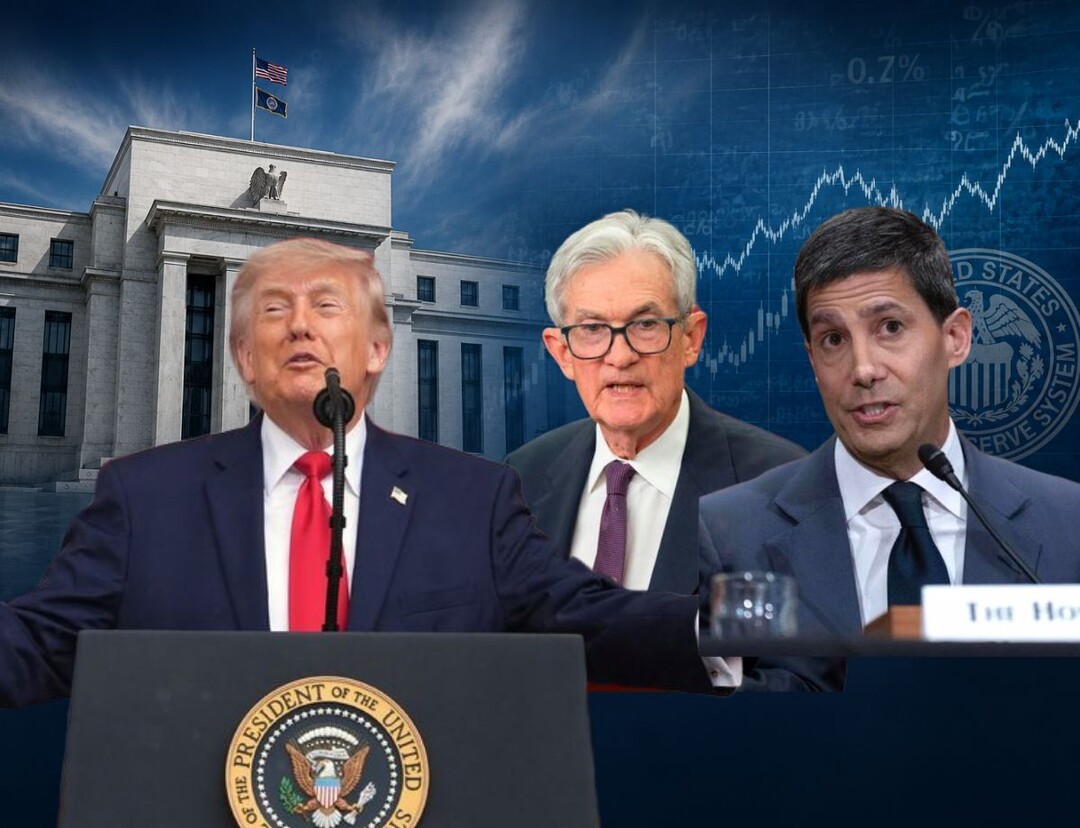 |
| ▲ 도널드 트럼프 미국 대통령(왼쪽부터), 제롬 파월 전 미국 연방준비제도(Fed) 의장, 케빈 워시 신임 연준 의장. [KPI뉴스 자료사진] |
경제사적 관점에서 미국 대통령과 중앙은행 총재 간의 관계를 분석한 최근 연구가 시사적이다. 메릴랜드대 토마스 드렉셀은 금년 4월 발표한 논문에서 백악관 아카이브(대통령 기록관) 자료를 활용하여 1933년부터 2016년까지 프랭클린 루스벨트부터 버락 오바마에 이르는 역대 미국 대통령과 연준 의장 간의 상호 작용을 분석했다. 대통령과 연준 의장과의 상호 작용은 공화당 리처드 닉슨 대통령 시절인 1970년대에 정점을 찍었고 민주당 빌 클린턴 대통령 시절에 최저치를 기록했다.
대통령과 연준 의장의 상호 작용은 전화 통화나 대면 회의 형태였으며 이것이 연준에 대한 부당한 압력을 꼭 의미하는 것은 아니다. 그러나 예컨대 닉슨 대통령과 1970년부터 1978년까지 연준 의장을 지낸 아서 번스와의 관계를 보면 중요한 맥락을 살필 수 있다. 번스가 취임했을 때 닉슨은 번스의 독립성을 존중하나 그가 독립적으로 닉슨의 견해를 따르는 결론을 내리기를 바란다고 말했다. 1971년 번스는 자신의 일기장에 닉슨의 표정에서 나타나는 억누를 수 없는 무도함과 행정부의 경제 정책이 실패할 경우 연준에 책임을 전가하려 하는 대통령의 책략이 엿보임을 토로했다. 실제 1972년 미국 대통령 선거 전에 연준이 단행한 금리 인하는 당시 경제 펀더멘털로는 설명하기 어려웠다. 반면에 닉슨이 대통령 재선에 성공한 이후 시행한 통화 긴축은 경제원리에 부합했다.
조 바이든 대통령과 트럼프의 아카이브는 아직 만들어지지 않았다. 하지만 연준 기록에 따르면 2017년 이후 트럼프와 연준 의장 간의 직접적인 상호 작용은 제한적이었다. 백악관의 압력은 외부에 드러나지 않는 전화 통화나 대면 회의보다는 익히 알려진 대로 트럼프 특유의 소셜 미디어와 언론 매체를 통해 공개적으로 표출되었다.
그렇다면 그동안 파월 의장은 어떤 전략을 모색했을까. 파월의 핵심 돌파구는 의회에 있었다. 직전 두 전임자인 벤 버냉키, 재닛 옐런 의장과 비교했을 때 파월은 의회와의 상호 작용에 더 적극적으로 나선 것으로 드렉셀과 메릴랜드대 달리 차카제의 4월 논문에서 분석되었다. 파월은 미 경제가 견조한 성장세를 보이고 실업률이 20여년 만에 최저치를 기록하며 주식 및 부동산 시장이 반등하던 2018년 연준 의장직에 올랐다. 그렇지만 연준의 잇따른 금리 인상으로 트럼프 1기 행정부 첫해부터 백악관과의 관계가 급격히 악화되었다.
이에 대응하여 파월은 의회 방문 횟수를 늘렸다. 이후 톰 틸리스 상원의원 등 여러 의원과 형성해 온 긴밀한 유대는 트럼프 행정부의 거듭된 공세로부터 연준의 독립성을 지키는 데 결정적인 역할을 했다. 파월은 여야를 막론하고 의회의 신뢰를 얻었고 이는 백악관으로부터 그를 보호하는 데 힘이 되었다. 파월은 1990년대 초 재무부에서 일할 당시 앨런 그린스펀이 정부와의 관계를 구축하는 모습에서 배운 바 있었고 이후 연준 의장이 되었을 때 옐런과 버냉키보다 의회에서 더 많은 시간을 보내야 한다는 확신을 갖게 된 것으로 알려져 있다.
연준에 대한 트럼프의 압력은 어느 정도 효과가 있었을까. 최근 연구에 따르면 트럼프 1기와 2기는 다소 차이가 있는 것으로 나타났다. 독일중앙은행의 이반 프랑코비치와 소렌 카라우는 금년 2월 발표한 논문에서 트럼프 1기에는 금리 인하를 촉구하는 트윗이 시장에 즉각적인 영향을 미쳐 금리 기대치를 낮추고 주가를 상승시켰으며 그 효과는 소규모 통화 완화와 유사했지만 트럼프 2기에는 양상이 달랐다고 분석했다. 트럼프 2기 들어 금리 인하 압력은 일부 측면에서는 의도한 효과를 발휘한 것으로 나타났다. 대통령의 요구 이후 미국 국채 금리는 하락했고 금값은 상승했으며 달러 가치는 며칠 동안 약세를 보였다.
이러한 움직임은 연준 통화 완화 정책의 효과와 유사했다. 그러나 그것이 전부는 아니었다. 주가를 상승시키고 주식시장의 변동성을 줄이며 인플레이션 기대치를 높이는 통화 완화와는 달리 트럼프의 연준 압박은 금융시장에 공포를 확산시켰다. 주가는 하락했고 주가 변동성에 대한 시장 기대치를 나타내는 공포지수(VIX)는 상승했으며 인플레이션 기대치는 하락하는 전형적인 위험 기피 패턴을 보였다. 트럼프 2기에서는 시장이 대통령의 위협을 연준의 금리 인하 결정과는 다른 부정적 관점에서 인식하는 것으로 나타났다.
중앙은행가의 정책 성향은 시장에 어떤 영향을 끼칠까. 괴테대 모리츠 그레베와 페터 틸만은 금년 3월 발표한 논문에서 2021년 옌스 바이트만 독일중앙은행 총재가 전격 사임할 당시 가계의 인식이 어떻게 변했는지 분석했다. 바이트만은 유럽중앙은행(ECB)의 초완화적 통화정책을 강력하게 비판하며 ECB의 채권 매입과 마이너스 금리 정책에 맞서 외로운 싸움을 벌인 인물이다.
마침 바이트만 총재 사임 당시 독일중앙은행의 정기 가계 설문조사가 진행 중이었고 보수적인 중앙은행 총재가 사임했을 때 가계의 인식이 어떻게 변하는지 사임 전후의 응답을 비교 분석할 수 있었다. 결과는 매우 명확하며 인과관계를 구분할 수 있게 해준다. 바이트만 사임 후 조사에 참여한 독일 가계는 인플레이션이 더 높아질 것이라고 예상했고 불확실성이 커졌으며 ECB에 대한 신뢰가 낮아진 것으로 인식했다. 독일인들은 보수적 중앙은행가의 리더십을 높이 평가하는 것으로 나타났다.
대통령, 의회, 중앙은행 총재가 만드는 다차원 복합방정식을 보는 듯하다. 한국의 중앙은행사를 돌아본다. 한국은행은 1950년 5월 제정된 한국은행법에 의해 창립되었다. 해방 이후 대한민국 정부는 현대적 금융제도 설계를 위해 선진국 금융 전문가의 도움을 받기로 하고 1949년 6월 김도연 재무부장관 명의로 미 연준 의장에게 전문가 파견을 요청한다. 당초 전시통제금융에 토대를 둔 일본식 법제의 테두리에서 벗어나지 못한 중앙은행법 초안에 대해 강한 의문을 처음 제기한 이는 김도연 재무부장관이었다. 김장관은 미국에서 함께 공부했고 절친한 최순주 조선은행(한국은행의 전신) 총재와 상의했다. 중앙은행법안의 중요성에 비추어 선진 입법례를 광범위하고 충실하게 참작할 필요가 있다는 결론에 도달했으며 최 총재가 이승만 대통령의 승낙을 받았다.
이렇게 해서 1949년 9월 한국에 파견된 뉴욕 연준의 아서 블룸필드 박사는 일제 강점기 대륙법 체계가 아닌 선진 미국법 체계에 기초한 한국은행법 초안을 1950년 2월 완성한다. 당시 한국의 금융경제법률에 관한 제한적 인식 수준에 비추어 볼 때 매우 생소한 법안이라 할 수 있다. 그렇지만 이승만 대통령, 김도연 재무부장관, 최순주 조선은행 총재 간의 긴밀한 상호 작용과 깊은 공감으로 추진된 법안이기에 1950년 3월 국무회의를 거쳐 1950년 4월 국회를 통과하고 5월 공포된다. 특히 중앙은행이 당시 국회가 법안을 이해하도록 설득하는 데 기울인 노고는 이루 말할 수 없는 것이었다고 구용서 초대 한국은행 총재는 술회했다. 대통령과 행정부, 국회, 중앙은행이 함께 만든 작품이 한국은행인 것이다.
중앙은행은 대통령, 의회, 중앙은행 총재가 균형과 상호 조화를 이루는 가운데 제도와 사람이 함께 만들어 가는 진화하는 생물체와 같은 존재다. 닉슨과 번스 시기에는 정치가 통화정책을 압도했고 그린스펀에서 배운 파월은 의회를 통해 독립성의 새 방파제를 구축했으며 독일의 예는 중앙은행가의 정책 성향에 따라 기대 인플레이션과 중앙은행 신뢰가 달라질 수 있음을 말해준다.
대한민국 초창기 지도자들은 중앙은행을 국가 경제 질서를 이끌어갈 독립적 제도로 설계했다. 대통령, 행정부, 국회, 중앙은행이 긴밀한 공감 속에서 만들어 낸 제도가 한국은행이다. 제도와 사람이 함께 만들어 내는 중앙은행 정치경제학의 역사는 계속 이어져 왔고 한국은행과 연준은 세계에 자부할 만한 훌륭한 역사를 지니고 있다. 새로운 수장을 맞은 한미 중앙은행은 그러한 역사를 더욱 발전시켜 나가는 시험대 위에 다시 서 있다. 워시와 신현송은 어떠한 리더십을 펼칠 것인가.
[Reading Finance & Economy with Cho, Hong Kyoon] The Political Economy of the President, Congress, and Central Bank Head
Kevin Warsh, the new Chair of the U.S. Federal Reserve, took the oath of office last Friday at the White House from Supreme Court Justice Clarence Thomas, with President Donald Trump in attendance. This marks the first oath-taking ceremony held at the White House since Alan Greenspan, who served as Fed Chair from 1987 to 2006. Seemingly recalling Greenspan's previous White House oath, Warsh stated that he would fill the role of Chair with passion and purpose, just the way Chair Greenspan did. Having succeeded Jerome Powell, who has steadfastly stood against President Trump's attacks, Warsh is seen as taking the helm of the Fed at a time when its independence faces the most serious challenge in its 112-year history. What should the relationship between the head of the central bank and the president be like?
A recent study analyzing the relationship between the U.S. president and the head of the central bank from an economic historical perspective is significant. In a paper published this April, Thomas Drechsel of the University of Maryland utilized materials from the White House Archives to analyze the interactions between successive U.S. Presidents and Federal Reserve Chairs from 1933 to 2016, spanning from Franklin Roosevelt to Barack Obama. Interactions between Presidents and Fed Chairs peaked in the 1970s during the presidency of Republican Richard Nixon and hit the lowest point during the presidency of Democratic Bill Clinton.
The interactions between Presidents and Fed Chairs took the form of phone calls or in-person meetings, and this does not necessarily imply undue pressure on the Fed. However, examining the relationship between President Nixon and Arthur Burns, who served as Fed Chair from 1970 to 1978, provides an important context. Upon Burns's inauguration, Nixon stated that while he respected Burns's independence, he hoped Burns would independently reach conclusions that followed Nixon's views. In 1971, Burns confided in his diary that he could sense the uncontrollable ruthlessness reflected in Nixon's expression and the president's scheme to shift blame to the Federal Reserve should the administration's economic policies fail. Indeed, the interest rate cuts implemented by the Fed before the 1972 U.S. presidential election were difficult to explain given the economic fundamentals of the time. Conversely, the monetary tightening implemented after Nixon's successful re-election was consistent with economic principles.
The archives of Presidents Joe Biden and Trump have not yet been created. However, according to Fed records, direct interaction between Trump and the Fed Chair has been limited since 2017. As is well known, White House pressure was expressed publicly through Trump's characteristic social media and press outlets, rather than through undisclosed phone calls or in-person meetings.
Then, what strategy did Chair Powell seek during this time? Powell's key breakthrough lay with Congress. This April paper by Drechsel and Dali Tsakadze of the University of Maryland analyzed that Powell engaged more activity with Congress compared to his two immediate predecessors, Chairs Ben Bernanke and Janet Yellen. Powell took office as Federal Reserve Chair in 2018, a time when the U.S. economy was showing robust growth, unemployment hit its lowest level in over 20 years, and the stock and real estate markets were rebounding. However, due to the Fed's successive interest rate hikes, relations with the White House deteriorated rapidly starting from the first year of the Trump administration's first term. In response, Powell increased the frequency of his visits to Congress. The close ties he subsequently forged with various lawmakers, including Senator Thom Tillis, played a decisive role in safeguarding the Federal Reserve's independence from repeated attacks by the Trump administration. Powell earned the trust of Congress regardless of party affiliation, which served as a strength in protecting him from the White House. It is known that while working at the Treasury Department in the early 1990s, Powell learned from observing Alan Greenspan build relationships with the government, which led him to become convinced that he needed to spend more time with Congress than Yellen or Bernanke did when he later became Chair of the Federal Reserve.
To what extent was Trump's pressure on the Fed effective? Recent research suggests there were some differences between Trump's first and second terms. In a paper published this February, Ivan Frankovic and Sören Karau of the central bank of Germany analyzed that during Trump's first term, tweets urging interest rate cuts had an immediate impact on the market, lowering rate expectations and boosting stock prices; they noted that the effect was similar to small monetary easing, but the dynamics were different during Trump's second term. It appeared that the pressure for interest rate cuts during Trump's second term produced the intended effect in some respects. Following the President's demands, U.S. Treasury yields fell, gold prices rose, and the dollar weakened for several days. These movements were similar to the effects of the Fed's monetary easing policy. However, that was not the whole story. Unlike monetary easing, which boosts stock prices, reduces market volatility, and raises inflation expectations, Trump's pressure on the Federal Reserve spread fear throughout financial markets. Stock prices fell, the fear index (VIX) which reflects market expectations regarding stock price volatility rose, and inflation expectations declined, exhibiting a classic risk-off pattern. It appeared that during Trump's second term, the market perceived the president's threat from a negative perspective distinct from the Fed's decision to cut interest rates.
How do the policy stances of central bankers affect the market? In a paper published this March, Moritz Grebe and Peter Tillmann of Goethe University analyzed how household perceptions changed following the sudden resignation of Jens Weidmann, head of Germany's central bank, in 2021. Weidmann is a figure who waged a lonely battle against the European Central Bank (ECB)'s bond purchases and negative interest rate policies, while strongly criticizing the ECB's ultra-loose monetary policy. Coincidentally, the central bank of Germany's regular household survey was underway at the time of President Weidmann's resignation, allowing for a comparative analysis of responses before and after the resignation to see how household perceptions changed when a conservative central bank head stepped down. The results are very clear and allow for the distinction of causality. German households participating in the survey after Weidmann's resignation anticipated higher inflation, perceived increased uncertainty, and felt that trust in the ECB had declined. It appeared that Germans held the leadership of conservative central bankers in high regard.
It feels like observing a complex multidimensional equation involving the president, congress, and the central bank head. Let us look back at the history of Korea's central bank. The Bank of Korea was established under the Bank of Korea Act enacted in May 1950. Following liberation, the Korean government decided to seek the assistance of financial experts from developed nations to design a modern financial system; in June 1949, Minister of Finance Kim, Do Yun requested U.S. Federal Reserve Chair the dispatch of experts from the Fed. It was Minister of Finance Kim, Do Yun who first raised strong doubts about the draft central bank act, which had failed to break free from the confines of the Japanese-style legal system based on wartime financial control. Minister Kim consulted with Choi, Sun Ju, Governor of the Bank of Joseon (the predecessor of the Bank of Korea), with whom he had studied in the United States and shared a close friendship. They concluded that, given the importance of the central bank bill, it was necessary to extensively and faithfully consider advanced legislative precedents, and Governor Choi obtained President Rhee, Syngman's approval. Thus, Dr. Arthur Bloomfield of the New York Fed, who was dispatched to Korea in September 1949, completed the draft of the Bank of Korea Act in February 1950, based on the advanced U.S. legal system rather than the continental legal system of the Japanese colonial era. Considering Korea's limited level of awareness regarding financial and economic laws at the time, this can be described as a very unfamiliar piece of legislation. However, because the bill was driven by close interaction and deep consensus among President Rhee, Syngman, Minister of Finance Kim, Do Yun, and Bank of Joseon Governor Choi, Sun Ju, it passed the Cabinet in March 1950, the National Assembly in April 1950, and was promulgated in May. Koo, Yong Su, the first Governor of the Bank of Korea, recalled that the efforts the central bank devoted to persuading the National Assembly to understand the bill at the time were indescribable. The Bank of Korea is a masterpiece created jointly by the president, the administration, the National Assembly, and the central bank.
Central banking is like an evolving creature, shaped by both institutions and people while the president, congress, and the central bank head maintain balance and mutual harmony. During the Nixon and Burns eras, politics overwhelmed monetary policy; Powell, having learned from Greenspan, established a new bulwark of independence through Congress; and the example of Germany illustrates how the policy stance of central bankers influence expected inflation and trust in the central bank. The early leaders of the Republic of Korea designed the central bank as an independent institution to lead the national economic order. The Bank of Korea is an institution created through the close consensus of the president, the administration, the National Assembly, and the central bank. The history of central banking political economy, shaped by both institutions and people, has continued, and both the Bank of Korea and the Federal Reserve possess a distinguished history to be proud of globally. With new leaders appointed, the central banks of Korea and the United States stand once again on the test to further advance that history. What kind of leadership will Warsh and Shin, Hyun Song demonstrate?
 |
| ▲ 조홍균 객원논설위원 |
●조홍균은
법·제도경제학자이자 35년 경력 중앙은행가. 경제, 금융, 기업 관련 정책과 제도를 주로 천착했다. 통화금융정책, 금융체제, 금융감독, 금융산업, 기업정책, 법경제 실무와 이론에서 전문성을 쌓았다. 중앙은행과 정부, 국제기구, 학계, 언론계 등에 걸쳐 폭넓게 이력을 쌓았다.
△ 미 워싱턴대 법학박사(J.D./J.S.D., 법경제학) △ 1989년 한국은행 입행 △ 1990년 조사제1부 조사역 △ 1999~2012년 정책기획국 과장 차장 팀장 △ 2016년 금융감독원 거시감독국 파견국장 △ 2017년 한국금융소비자학회 부회장 △ 2018년 한국금융연수원 교수 △ 2022년 경제연구원 부원장 △ 저서: 우리 시대의 금융경제 읽기(박영사, 2025년) △ 2025년~ 고려대 행정전문대학원·법무대학원 교수, 한국은행 경제연구원 객원연구위원
[ⓒ KPI뉴스. 무단전재-재배포 금지]